Community Guide

Tips and tricks from experienced players
Game Version: 48.0.3
Welcome
This guide was put together by players who have spent countless hours playing Werewolf and want to share what they've learned. Think of it as advice from a friend who's been there — someone who can point out the little things that make a big difference.
Plato covers the rules, but there's so much more to discover: how to read other players, when to speak up, how to deceive convincingly, and what experienced players expect from each other during a match.
Playing Nice Goes a Long Way
After thousands of matches, players have naturally developed some ground rules that keep games fun and fair for everyone. Nobody likes a match where roles are revealed instantly or where one player ruins the experience for others.
Simple things like waiting until the last second to vote (so you don't give away too much information early), or knowing when to speak up versus when to listen, can completely change how much you and others enjoy the game. These aren't official rules — just good habits that make every match better.
How to Win

Villagers
Eliminate all wolves

Werewolves
Kill enough villagers to outnumber them
What's Inside
Rules — A quick refresher on how Day and Night phases work, plus some timing details you might have missed.
Roles — Full breakdown of every character's abilities, with tips on how to play them well.
Tips — Strategies for both teams, common mistakes to avoid, and how to read other players.
FAQ — Answers to questions that come up all the time in matches.
This Community Guide was created by Werepedia — a project built by players, for players.
Last updated: March 2026 | v1.1
Game Rules
Master the basics

Day Phase ~110s
Start: Roles are assigned
Discussion: Share info, accuse, defend
Voting: Select a suspect
Defense: Accused reveals role
Judgment: Vote to kill or spare

Night Phase ~30s
- Wolves vote on who to kill
- Special roles use their abilities
- Pre-type your action! Send at the last second
 Important
Don't reveal your role unnecessarily! It puts you at risk. Use "last-second voting" on Day 1.
Interface
 History
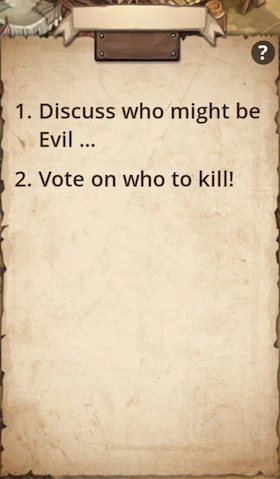
The paper scroll in the center shows everything happening in the game: votes, actions, and role-specific events. Each event is numbered chronologically.
 Voting History
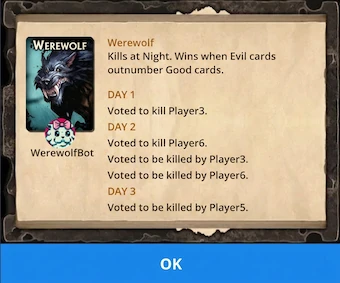
Tap any player's card to see their final votes and who voted for them. Unlike the main History, this shows only definitive actions—key for spotting wolf patterns.
Game Settings
Configure your match before starting. The room creator chooses the player count and role distribution.
 Players: 7 or 9. The 9-player format is recommended for the full experience.
 All Random Roles:

Roles
Explore all characters

Seer
Good RoleAbility
Every night, the Seer can check a player to know which team they belong to. Roles like Alpha Wolf, Shapeshifter, Jester, and Lycan partially or totally affect the authenticity of the information this role can provide.
Strategy and Tips
- Read everything said carefully to know who to check.
- Do not reveal information unnecessarily. Make sure there are no roles like Wolf Shaman before revealing info.
- Have an attitude and make yourself heard.
Advanced Play
The Seer can make risky plays like fake claiming/accusing falsely to pressure a player. If they reveal themselves instantly upon being accused, it is key to back down and give the real information.
Pro Tips
Level up your game

Last-Second Voting
Vote at the very end of Day 1. This prevents revealing multiple roles and keeps the game balanced and fun for both teams. It also helps develop your unconscious role-reading skills—when you vote, you need some idea who you're voting for, training your brain to associate roles with behaviors.

Pre-Type Everything
Write your night action before the timer runs out. Send it at the last second to prove your role and prevent stealing.
"I am Doctor, saving PlayerX"

Read the History
Check the voting history and chat. Contradictions and patterns reveal wolves. Your individual history—what you said, how you voted, who you defended—is your shield. Being able to sell your coherence is how you survive.

Baiting
Fake a valuable role at night to attract wolf attacks. Useful for Hunter, Knight, or King to protect real important roles. If a bait worked before, stick to that posture—but don't lie so much that your own team punishes you.
"Bard here, charming PlayerX"
As a role like Hunter, send this 5 seconds before night ends. Make sure the role isn't in the game, or be ready to explain yourself afterwards.
General Strategies (Day & Night)
Knowing what each role does isn't enough—you need to know how to behave. Every decision matters. We divide strategies into day and night phases.
Day Strategies
The day is when everyone talks, accuses, defends, and votes. Master this phase by staying calm and appearing believable.
Villagers
- Never trust blindly. Even convincing players might be acting. Always doubt and evaluate.
- Analyze contradictions and silence. Wolves might stay too quiet or talk too much to manipulate.
- Don't force reveals. Asking everyone to reveal roles only helps wolves.
- Hold suspicions. Speaking too early lets suspects adapt. Timing is everything.
- Think before voting. Last-second voting on Day 1 isn't just tradition—it's tactics that creates useful chaos.
Wolves
- Appear as a villager. Build trust without looking forced. Don't stand out too much or disappear.
- Participate like you're good. Share opinions, suggest theories, express doubts.
- Defend teammates subtly. But remember: sometimes sacrificing a teammate secures the win.
- Maintain coherence. Logical mistakes expose you. If you lie, repeat your story.
- Vote strategically. Sometimes letting a fellow wolf die cleans your image.
Night Strategies
Night isn't a pause—it's the most technical moment. What happens in those seconds can bring decisive advantage or downfall.
Villagers
- Pre-type with clarity. Include your role, target, and brief justification. Speed matters.
- Mislead with baits. Use fake role claims to attract wolf attacks and protect real valuable roles.
- Protect key roles. If you know who has an important role (like Seer), keep them alive at all costs.
- Repeat successful patterns. If a bait worked before, stick to it. But don't confuse your own team.
Wolves
- Deceive with fake pre-types. The most dangerous wolves look good during nights.
- Plan impactful kills. Choose targets that break information chains or cause panic.
- Change style if suspected. Adjust behavior, build a role identity, become more active.
- Exploit good team mistakes. Sometimes you don't need to lie—just plant doubt around their errors.
Common Mistakes
Avoid these patterns that hurt your team:

Talking Too Much
Revealing unnecessarily or over-explaining makes you look defensive.

Staying Silent
Not participating out of fear. Better to say something reasonable than nothing.

Impulse Voting
Voting without basis or on personal dislike ruins matches.

Poor Pre-typing
Typing late or with mistakes reduces credibility and risks role stealing.
Play After Death
Dying is not losing. A good player can leave the path prepared for their team even after death.
Your final words and votes can still help your team or bury it. Don't leave the game immediately—understand that you're playing beyond your own survival. Understanding this means playing beyond your ego.
FAQ
Common questions
Only when necessary: during Defense if on trial, or strategically to help your team. Never reveal just because someone asks.
Typing your night action before the timer ends and sending it at the last second. This proves authenticity and prevents role stealing.
Prevents mass role reveals on Day 1, keeps the game fun for everyone, and helps you develop role-reading skills.
Yes! Your final words and votes can still help your team. Don't leave the game immediately.
Knight, Princess, and Jester. While any of them are alive, the King cannot be killed by wolves during the night.
Alpha Wolf appears as GOOD. Shapeshifter and Jester appear randomly. Lycan appears as GOOD even after turning.